
Tax season can feel like you are managing a multi-layered financial blueprint. You know the deadline is approaching, and you know you need to file, but the paperwork can quickly become so overwhelming.
You can have a clear tax documents checklist from the start to take control early. At Skyline Financial Management, we know that a calm and confident tax season starts with preparation, not last-minute form-filling.
Gathering your documents in advance helps you avoid errors, prevent delays, and find deductions or credits you might otherwise miss. This guide walks you through everything you should have on hand so you can file confidently, accurately, and without unnecessary hassle.
9 Essential Steps to Ensure You File Accurately
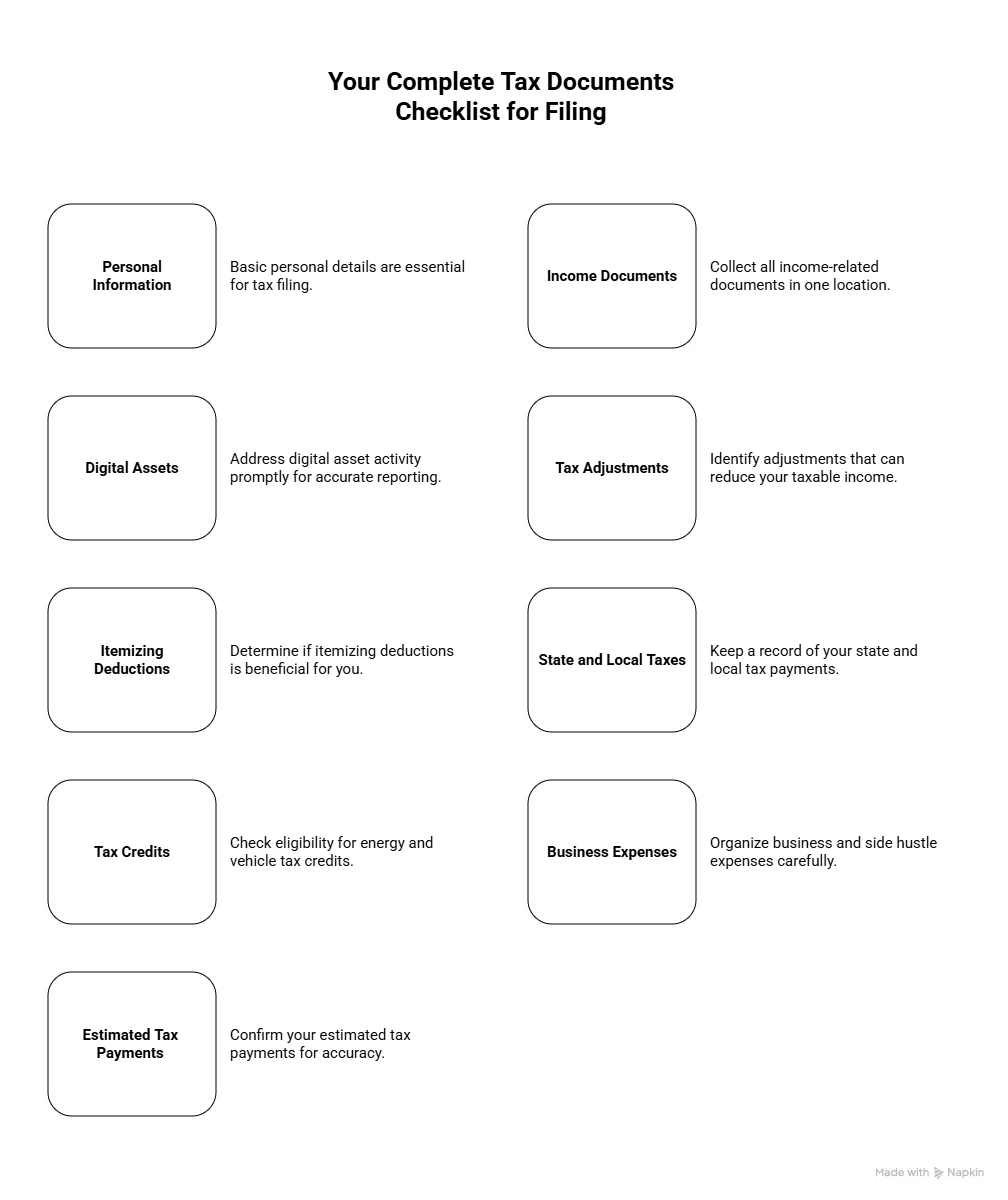
1. Start With Your Basic Personal Information
Before you review income or expenses, make sure your personal details are correct and complete. Small errors here are one of the most common reasons tax returns get delayed.
You should have:
- Taxpayer Identification or Social Security numbers for you, your spouse, and all dependents.
- Social Security cards for any new dependents.
- A valid government-issued ID.
- Your current mailing address.
If you want the fastest refund possible, you will also need your routing number and bank account for direct deposit. Paper checks take longer and are more likely to get lost.
2. Gather All Your Income Documents in One Place
Income often comes from more than just a paycheck, which is why this step is critical in your tax documents checklist.
Here’s what you should include:
- W-2 for wages from an employer.
- 1099-NEC for freelance or contract work.
- 1099-INT for interest earned.
- 1099-DIV for dividends.
- 1099-B for the sale of stocks or investments.
You also need to think about income that doesn’t come with a standard form. Jury duty pay, prizes, gambling winnings, or referral bonuses are all taxable. If you earned it, it needs to be documented.
3. Account for Digital Asset Activity Early
Cryptocurrency and digital assets continue to receive close IRS attention. Even if you didn’t receive a formal 1099, you are still required to report transactions.
You must keep records of:
- Dates of each transaction.
- Fair market value at the time of sale or exchange.
- Original purchase price (cost basis).
Providing organized transaction records helps you ensure compliance and prevents costly reporting mistakes.
4. Identify Adjustments That Can Lower Your Taxable Income
Adjustments to income can lower your Adjusted Gross Income (AGI), which can help you become eligible for additional credits and lower your overall tax liability.
Documents to gather include:
- Form 1098-E for student loan interest.
- Proof of traditional IRA or HSA contributions.
- Records of educator expenses if you are a teacher.
If you are self-employed, certain deductions like health insurance coverage and half of your self-employment tax preparation are calculated during filing.
5. Decide Whether Itemizing Deductions Benefits You
Many taxpayers receive more from the standard deduction, but itemizing can still be valuable depending on your situation.
Documents you need to review before deciding:
- Form 1098 for mortgage interest.
- Property tax statements.
- Medical and dental expense receipts.
- Charitable contribution acknowledgments.
Medical bills must exceed 7.5% of your AGI to qualify. For charitable donations over $250, you should have written confirmation from the organization.
6. Keep Track of State and Local Tax Payments
State and local taxes are an important, and often neglected, part of a complete tax document checklist.
You should collect:
- State income tax paid, which is usually on your W-2.
- Sales tax receipts for major purchases.
- Personal property tax records for vehicles.
If you operate a business that collects or remits sales tax, accurate records are especially important for sales and use tax compliance.
7. Check Eligibility for Energy and Vehicle Tax Credits
Tax credits can reduce the tax amount you owe, sometimes by thousands of dollars.
You may need documentation for:
- Solar panel installations.
- Energy-efficient windows, doors, or HVAC systems.
- Electric or clean-energy vehicle purchases.
We suggest that you keep invoices, manufacturer certifications, and purchase agreements to support these credits.
8. Organize Business and Side Hustle Expenses Carefully
If you earn income outside of a traditional job, your tax documents checklist becomes more detailed.
Common expense records include:
- Advertising and marketing costs.
- Software and subscriptions.
- Home office expenses.
- Professional and legal fees.
Mileage is usually missed or poorly tracked. You should maintain a log showing the date, destination, and your business purpose for each trip. Estimates after the fact can raise red flags.
9. Confirm Your Estimated Tax Payments
If you made quarterly estimated payments, make sure that you have the exact dates and amounts. Forgetting to report them means you may not receive credit for money you already paid.
Check:
- Bank statements.
- IRS online account records.
- Payment confirmations.
Accurate reporting here prevents unnecessary overpayments or notices.
Not sure if your documents are complete or want expert help with filing and strategy? Our Online CPA Services for Startup can guide you through every step.
Tax Documents Checklist FAQs
1. When should I start gathering my tax documents?
You should start as soon as the year ends. Early preparation gives you time to request missing forms and avoid last-minute pressure.
2. What if I am missing a form?
You should contact the issuer immediately. Filing with estimated numbers increases the risk of errors and IRS correspondence.
3. Do I need to keep receipts if I take the standard deduction?
Yes. Some deductions and credits still require documentation, and records are important for future reference.
4. How long should I keep my tax documents?
You should keep most records for at least three years. Some documents related to property or investments should be kept longer.
5. Can a CPA help even if I already have my documents?
Absolutely. A CPA ensures that your documents are applied correctly and strategically.
Key Takeaways
When you start with the right tax documents checklist, everything else becomes more manageable. At Skyline Financial Management, we see firsthand how proper preparation saves time, money, and stress.
Zahra Samji, our licensed Houston CPA, works directly with clients to ensure no document is left behind and no opportunity is missed. If you want personalized guidance and a smoother tax season, now is the time to get in touch with her. Reach out to tax accountant Houston today!

