

As a business owner or entrepreneur, you constantly evaluate the professionals who support your operations. When it comes to financial oversight, one of the most frequently asked questions is what is a CPA for taxes and how that role differs from a standard tax preparer.
Understanding the real value behind the responsibilities of a CPA allows you to move past reactive tax filing and toward proactive financial management.
What Is a CPA for Taxes in Professional Terms
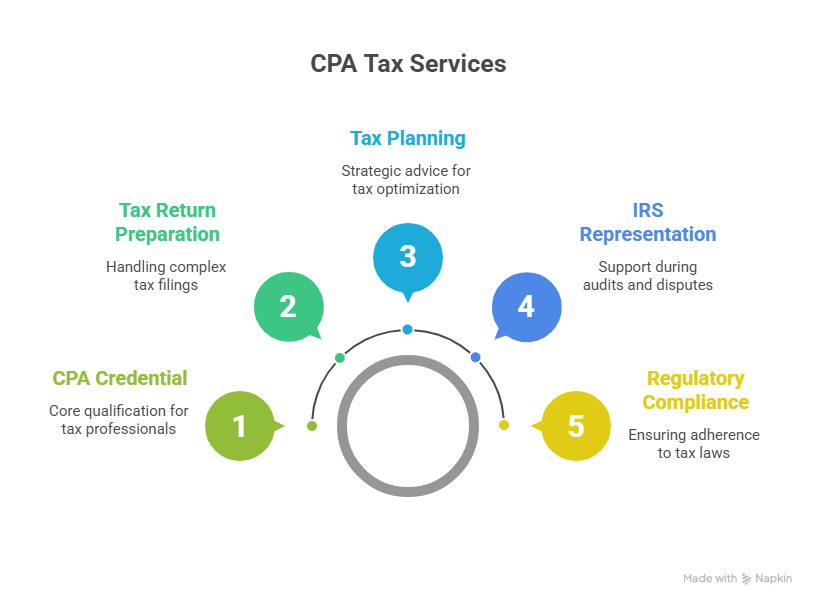
A Certified Public Accountant (CPA) is a specialist in finance who is licensed and has completed extensive education, passed a complex national exam, and maintained ongoing continuing education requirements. This credential is regulated by state licensing boards and carries strict ethical standards.
When you hire a CPA for taxes, you are engaging a professional who can:
- Prepare and review complex tax returns.
- Provide strategic tax planning.
- Represent you in IRS audits or disputes.
- Ensure your business complies with federal and state regulations.
This licensing also grants CPAs unlimited representation rights before the IRS, which means they can advocate on your behalf during audits, appeals, or collection matters.
Many tax preparers focus solely on entering numbers into software. A CPA evaluates those numbers within the broader framework of tax law, business structure, and long-term financial planning.
Why Strategic Tax Planning Happens Long Before Tax Season
One of the most misunderstood aspects of tax management is timing. You might assume that tax work only happens during filing season. In reality, the most valuable tax decisions occur months before a return is submitted.
A CPA evaluates financial activity throughout the year to identify opportunities that reduce tax liability.
For example, a timely S corporation election can substantially reduce self-employment taxes for profitable businesses. However, this election must be filed within specific deadlines to take effect.
A CPA analyzes factors such as:
- Business entity structure.
- Timing of capital purchases.
- Deduction strategies.
- Cash flow management.
This planned approach demonstrates that what is a CPA for taxes goes far beyond preparing annual tax forms. It is about structuring your finances in a way that reduces liabilities while maintaining full compliance.
How a CPA Builds Audit-Ready Financial Records
An IRS audit rarely focuses on the final number on your tax return. Instead, it examines how you calculated that number and whether you can support it with proper documentation.
A CPA prepares your financial records with an audit-ready mindset from the beginning. This includes ensuring your expenses are categorized correctly and that deductions are supported by appropriate documentation.
For example, certain expenses, such as travel, equipment purchases, or home office deductions, must meet specific IRS guidelines to remain valid. Misclassifying these transactions can trigger scrutiny during an audit.
Knowing what a CPA is also means recognizing their role in protecting your financial credibility. A CPA ensures that your financial records tell a consistent and defensible story if they are ever reviewed by tax authorities.
Managing Payroll Compliance and Ongoing Tax Responsibilities
For businesses with employees, tax compliance becomes even more complicated. Payroll taxes must be calculated accurately and submitted according to federal and state deadlines.
This includes maintaining proper documentation for wages, benefits, and employer tax contributions.
Many growing companies rely on professional oversight for their quarterly payroll filing responsibilities to ensure that payroll taxes are reported and paid correctly throughout the year.
A CPA evaluates payroll data within the larger context of your financial structure. This ensures that employer obligations are met while also identifying tax planning opportunities related to compensation strategies.
This broader oversight is another example of what is a CPA for taxes in practice. It is about integrating tax compliance into your everyday financial operations.
Comparing a CPA With a Traditional Tax Preparer
To fully understand the value of a CPA, it helps to compare the scope of services offered by different professionals.
| Feature | Seasonal Tax Preparer | Certified Public Accountant |
| Education | Minimal required | Extensive education and licensing |
| IRS Representation | Limited | Unlimited representation rights |
| Focus | Filing tax returns | Effective financial planning |
| Compliance Oversight | Basic | Advanced tax law expertise |
| Value Provided | Data entry | Tax optimization and risk management |
In Conclusion
Tax management should never be treated as a simple administrative task. Your financial decisions affect everything from cash flow and compliance to investor confidence and long-term business growth.
Understanding what is a CPA for taxes helps you see the difference between basic tax preparation and strategic financial planning. A CPA provides professional representation, year-round tax strategy, and a structured approach to managing complex financial responsibilities.
Do you want to reduce tax risk and maintain audit-ready records? Let our certified CPA Houston, Zahra Samji, help you deal with tax regulations, identify opportunities for savings, and maintain compliance at every stage of growth.
Schedule a consultation with her today and experience the value of working with a licensed Houston CPA.
FAQs
Does a CPA do taxes for small startups that aren't profitable yet?
Yes, and this is the most critical time to engage one. A CPA focuses on capturing “loss carryforwards” and R&D tax credits that can provide immediate cash flow benefits or reduce future tax burdens once the company becomes profitable.
Do you need a CPA to do taxes if you use professional software?
While software can help you organize data, it cannot provide a strategy. Software won’t tell you if your entity structure is costing you money or if you have a state nexus issue. A CPA provides the interpretation that software lacks.
How much should I expect to pay for a CPA's tax services?
The investment varies based on the complexity of your business. However, you should view the fee for a CPA for taxes as a strategic investment.
Can a CPA help with local and state tax issues, not just federal?
Yes. A significant part of a CPA’s value is managing “nexus” and ensuring you are compliant with state income tax, franchise tax, and sales tax. This is vital for businesses that operate online or have employees in multiple jurisdictions.
Can a CPA help with local and state tax issues, not just federal?
Yes. A significant part of a CPA’s value is managing “nexus” and ensuring you are compliant with state income tax, franchise tax, and sales tax. This is vital for businesses that operate online or have employees in multiple jurisdictions.

