
Opening an envelope from the IRS can turn a normal afternoon into a stressful one, and the instinct to panic is completely understandable.
But finding the right IRS audit help quickly changes the entire trajectory of your situation, from how much you end up owing to how much stress you carry through the process. The first 48 hours after receiving a notice matter more than most people realize.
What Your Notice Means Before You React
Not every letter from the IRS signals a full audit. Many notices simply request clarification, flag a math discrepancy, or ask for missing documentation. Reacting with panic before understanding what the notice says can lead you to respond incorrectly or miss the real issue entirely.
Every notice includes a specific code in the corner that tells you exactly what type of correspondence you received:
- CP2000 notices flag a mismatch between your return and third-party reporting, like a 1099 or W-2.
- Audit notices request specific documentation to support deductions or credits you claimed.
- Collection notices address balances owed rather than questioning the accuracy of your return.
Reading the notice code first tells you whether you are dealing with a simple clarification or something that requires a more structured response.
IRS Audit Help Looks Different Depending on Your Situation
The type of support you need depends heavily on why you received the notice in the first place. A mismatched 1099 requires a different approach than a full audit questioning your business deductions across an entire tax year.
Understanding this distinction early prevents you from either underreacting to something serious or overreacting to something manageable.
Consider how differently these situations unfold:
- A correspondence audit handled entirely by mail, often resolved with proper documentation.
- An office audit requires an in-person meeting to review specific items on your return.
- A field audit involves a broader review of your business records and financial history.
Each type carries different timelines and different levels of complexity, which is why a one-size-fits-all response rarely works well.
Why Timing Your Response Protects Your Rights
Every IRS notice includes a deadline, and missing it can eliminate options that were otherwise available to you. Some notices give you thirty days to respond, while others allow less time depending on the nature of the request.
Once a deadline passes, the IRS may proceed with an assessment based on its own calculations, which is almost always less favorable than what you would have negotiated with proper guidance.
This is exactly where practical IRS audit help matters most. We help clients understand what a notice is asking for and what the deadline pressure looks like, so decisions get made with full information instead of blind urgency.
If your notice involves unfiled returns from previous years, addressing that gap through structured back tax resolution becomes the necessary first step before any audit questions can be fully resolved.
Gathering the Right Documentation Before You Respond
Audits typically focus on specific line items rather than your entire return, which means you do not need to reconstruct every financial detail from the year in question.
Knowing exactly what the IRS is asking for saves you valuable time and lowers the chance of submitting irrelevant or incomplete documentation.
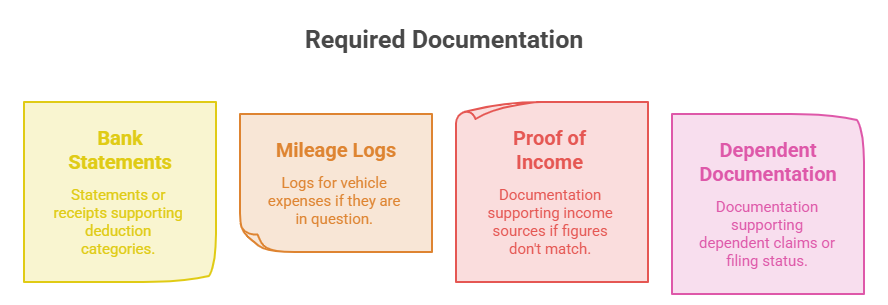
Depending on what triggered your notice, you may need:
- Bank statements or receipts supporting a specific deduction category.
- Mileage logs if vehicle expenses are in question.
- Proof of income sources if reported figures do not match third-party records.
- Documentation supporting dependent claims or filing status.
Submitting organized, relevant documentation the first time reduces the likelihood of follow-up requests that extend the process further.
How Ongoing Compliance Reduces Your Audit Risk Going Forward
The best response to an audit notice is preventing the next one. Many audits trace back to inconsistent recordkeeping or gaps in reporting that build up over multiple years without anyone catching them.
Staying current with tax compliance requirements throughout the year, not just reviewing your finances at filing time, significantly lowers the chance of a discrepancy triggering IRS attention in the first place.
Businesses face particular exposure here, since payroll misclassifications and underreported income tend to draw more scrutiny under current IRS enforcement priorities.
Understanding how tax evasion penalties differ from honest mistakes matters because the IRS treats intentional evasion very differently from a documentation gap or a filing error made in good faith.
What to Expect When You Work With a CPA During an Audit
Facing IRS correspondence alone often means guessing at the right response, but the right IRS audit help gives you someone who understands the process, knows what documentation carries weight, and helps you avoid statements that could unintentionally expand the scope of the review.
Zahra Samji works directly with Houston clients facing notices and audits, translating confusing correspondence into a clear plan of action. She reviews the specifics of your situation, explains what the IRS is asking for, and helps you prepare thorough, accurate responses instead of guessing your way through the process alone.
Bringing Clarity to a Stressful Situation
Facing an IRS notice does not have to mean facing it without IRS audit help and a clear understanding of what comes next.
When you take the time to read your notice correctly, gather the right documentation, and respond within your deadline, you protect both your finances and your sense of security.
The businesses and individuals who come through an audit with the least stress are almost always the ones who addressed the notice early with a clear strategy instead of waiting and hoping the problem would resolve itself.
Need help with an IRS audit? Reach out to us now!
IRS Audit Help FAQs
How long do I have to respond to an IRS audit notice?
Most notices give you thirty days, though the exact deadline is printed on your specific letter and should never be assumed.
Does receiving an audit notice mean I did something wrong?
Not necessarily. Many audits result from random selection or automated flags rather than any intentional error on your part.
Can I handle an IRS audit without professional help?
You can, but professional guidance significantly reduces the risk of providing information that unintentionally expands the scope of the review.
What happens if I ignore an IRS notice completely?
Ignoring a notice can lead to an assessment based solely on IRS calculations, which is typically less favorable than a negotiated resolution.
Will an audit automatically mean I owe more money?
Not always. Some audits result in no change, and occasionally they can even reveal a refund you were previously owed.

