

Deciding to close a business is never just a paperwork exercise. As an owner, it’s emotional, exhausting, and filled with uncertainty for you about what comes next.
Whether you are moving on to a new opportunity, retiring, or simply realizing this chapter has reached its end, understanding how to dissolve an LLC correctly is crucial.
At Skyline Financial CPA Houston, we regularly see business owners assume that stopping operations is enough. Unfortunately, it isn’t. If you don’t formally and properly dissolve your LLC, you could still be responsible for state fees, taxes, and even legal claims years down the road.
Our goal is to help you exit cleanly, protect your personal assets, and give you complete assurance as you move forward.
Begin With a Thorough Operating Agreement Review
Before you file anything with the state or the IRS, the dissolution process begins internally. Your LLC’s operating agreement should outline exactly how the business must be closed down.
Most agreements require:
- A formal meeting of members.
- A vote approving the dissolution.
- A documented resolution.
Even if you are a single-member LLC, you should create a written Member Resolution stating your intent to dissolve.
This document becomes the foundation of your legal paper trail and clearly shows when the dissolution of LLC activities officially began.
How to dissolve an LLC Starts With Making it Official at the State Level
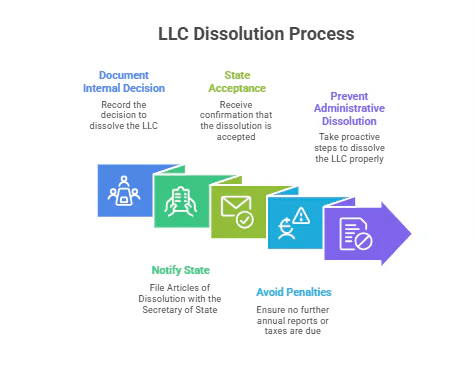
Once the internal decision is documented, you must notify your state that the LLC is no longer active. This is done by filing Articles of Dissolution or a Certificate of Cancellation with the Secretary of State.
Until this filing is accepted, the state assumes your business still exists. That means:
- Annual reports are still due.
- Franchise taxes may continue to increase.
- Penalties can build quietly over time.
Some owners mistakenly assume the state will “auto-close” an inactive LLC. While administrative dissolution can happen, it does not always eliminate liability, and in some cases, it creates more problems than it solves.
You May Need a Tax Clearance Before Dissolution Is Approved
Many states will not allow LLC dissolution filings unless all state tax obligations are satisfied. This includes income taxes, withholding taxes, and sales tax collected but not yet remitted.
In these cases, you must request a tax clearance certificate or letter of good standing from the Department of Revenue. Your Articles of Dissolution can only be processed after this clearance is issued.
This step is sometimes missed and is the most common reason dissolution filings are rejected, leaving business owners stuck in legal limbo.
You Must File a Final Federal Tax Return Correctly
As you are learning how to dissolve an LLC, you must know that the IRS also needs a formal notice that your business has ended. On your final federal return, Form 1065 or Form 1120-S, you must check the box labeled “Final Return.”
This tells the IRS:
- No future returns will be filed.
- The EIN should be marked inactive.
- Asset dispositions are being reported.
If your LLC owns equipment, vehicles, or property, those assets must be properly distributed or sold and reported. Mishandling this step can increase audit risk long after your business is closed.
Our professional CPA, Zahra Samji, carefully reviews these final filings to make sure that nothing is skipped over.
You Should Close Your EIN and Business Bank Accounts Carefully
Checking the “Final Return” box does not automatically close your IRS account. You must send a written letter to the IRS requesting EIN closure and include identifying details about the LLC.
At the same time, you should prepare to close your business bank accounts, but not too early. Keep them open until:
- All final expenses are paid.
- Outstanding checks clear.
- Any tax refunds are received.
Before closing your accounts, download and securely store bank records for at least seven years.
You Are Legally Required to Notify Your Creditors
An LLC cannot be dissolved to avoid its debts. You must formally notify known creditors that your business is closing and give them a window to submit claims.
This step protects you. Once the notice period closes, creditors who fail to respond are generally exempt from future claims. Skipping this step can extend liability exposure for years.
You Must Pay Debts in the Correct Order
As you work through how to dissolve an LLC, the order in which you pay outstanding obligations matters more than many owners realize.
If your LLC has limited funds, paying members before creditors can expose you to personal liability.
In most cases, payments should follow this general order:
- Federal and state taxes.
- External creditors.
- Member distributions.
If your business cannot pay all of its obligations, we strongly recommend that you seek guidance from our CPA before issuing payments.
You Need to be Extremely Careful With Trust Fund Taxes
Payroll taxes and sales taxes are considered “trust fund” taxes. These amounts were collected on behalf of the government, and limited liability does not protect you if they go unpaid.
Even after LLC dissolution, unpaid trust fund taxes can result in personal bank levies or liens. You should always ensure that these obligations are fully satisfied before closing accounts.
A Simple Timeline for LLC Dissolution
| Step | What it accomplishes |
| Member resolution | Establishes intent and paper trail |
| Articles of Dissolution | Ends state-level existence |
| Tax clearance | Confirms state tax compliance |
| Final IRS return | Closes federal filing obligations |
| Creditor notice | Limits future liability |
| Record retention | Protects against audits and claims |
How to Dissolve an LLC FAQs
1. How much time does it take to dissolve an LLC?
It can take anywhere from a few weeks to several months. It depends on state requirements and tax clearances.
2. Do I still owe taxes after dissolution?
Yes, you must file final returns and pay all outstanding taxes before closure is complete.
3. Can I dissolve an LLC with debt?
Yes, but you must properly handle debts and follow creditor notice rules.
4. Does dissolving an LLC cancel my EIN?
No. You must request EIN closure separately with the IRS.
5. How long should I keep my business records?
You should keep them for at least seven years after dissolution.
Final Words
Knowing how to dissolve an LLC helps you close your business without leaving loose ends behind. When you do it correctly, LLC dissolution provides clarity, closure, and confidence.
At Skyline Financial Management, we guide business owners through every financial and tax-related step of dissolution with precision and care.
Ready to close your LLC? Reach out today and let Houston CPA Zahra guide you forward with informed and confident planning!

