

When your business reaches a certain level of complexity, the gap between adequate tax accounting and genuinely strategic tax accounting becomes expensive to ignore.
Tax accounting services are not just about filing on time. They are about making sure your business structure, your reporting, and your compliance decisions work together to support your financial goals.
If you are running a business in Houston and handling taxes reactively, this blog is worth reading carefully.
Why Your Tax and Accounting Setup Becomes a Liability When It Stops Keeping Pace
Most business owners start with a simple setup because it is all they need. A spreadsheet, a basic bookkeeping tool, and an accountant who files once a year. That setup works until it does not.
The point where it stops working tends to arrive quietly. Your quarterly estimates were off. A deduction you qualified for was not applied. Your entity structure no longer reflects how your income flows. None of these issues announce themselves loudly, and that is exactly what makes them costly.
Accounting and tax services built around your current business catch these gaps before they compound. The right structure reviewed annually, payroll handled correctly, and books that stay tax-ready are fundamentals for a growing business.
If your accounting setup has not been reviewed in over a year, it may no longer reflect your business accurately. View how our small business accounting services keep your financials current and compliant.
The Specific Areas Where Tax Accounting Services Add the Most Value
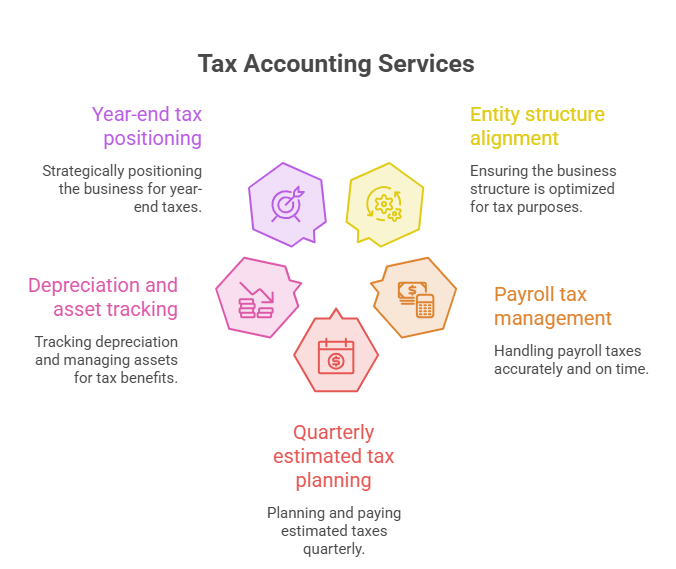
Not all accounting work has equal impact on your tax position. These are the areas where focused professional attention produces the clearest return:
- Entity structure alignment. Your entity type determines how your income is taxed, how you pay yourself, and what deductions you can access. If your structure was set at formation and never revisited, it may no longer fit your income level.
- Payroll tax management. Misrepresentation of workers as contractors instead of employees is among the most common compliance issues small businesses face. Getting this right upfront is far less expensive than addressing it after an IRS notice.
- Quarterly estimated tax planning. Underpaying triggers penalties, and overpaying ties up cash you could use in your business. Accurate projections updated throughout the year keep you in the right range.
- Depreciation and asset tracking. Equipment, vehicles, and leasehold improvements carry deduction potential. Without proper tracking, these deductions get underused or missed.
- Year-end tax positioning. December is not too late to affect your tax bill, but only if your books are current and someone is reviewing your position before the year closes.
Zahra Samji provides direct, one-on-one accounting and tax services for Houston businesses across a range of industries. If any of the above areas feel uncertain in your current setup, a consultation is a practical first step. Start your financial strategy conversation.
How Tax Accounting Services Connect to Business Decision-Making
The most underappreciated function of a good tax accountant is not the filing itself. It is the financial context they provide that helps you make better decisions throughout the year.
When you are considering a business loan, your accountant should tell you how the interest expense affects your taxable income and whether the cash flow math supports repayment. When you are thinking about bringing on a full-time employee, the payroll tax implications should be part of that conversation before you commit.
This is where accounting and tax services shift from a compliance function to a strategic one. You are not just getting a return prepared. You are getting someone who sees your numbers regularly and translates them into practical guidance.
For self-employed professionals and small business owners, this connection between accounting and decision-making is often the missing piece. Many businesses have someone handling the books and someone filing taxes, but no one connecting those two functions to the decisions being made at the top.
Zahra Samji, founder of Skyline Financial and a licensed CPA with a background at PwC and Deloitte, built her practice around this integrated model. You work directly with her, which means the guidance you receive is grounded in someone who has reviewed your actual numbers.
Looking for tax accounting offerings that connect your financials to how you run your business? Explore what Skyline Financial CPA offers Houston businesses. Find out more about CPA services in Houston.
Bringing It All Together
Professional tax accounting services do their most valuable work before tax season, not during it.
The businesses that consistently pay what they owe and nothing more have a setup where their entity structure is reviewed, books stay current, and someone is looking at the full financial picture regularly enough to catch problems and opportunities before they pass.
If your current setup is not giving you that, a more integrated approach to accounting and tax services is worth exploring.
Tax Accounting Services FAQs
How often should a business owner review their entity structure with a CPA?
At minimum, once per year and any time your income increases significantly, you add a business partner, or you expand into new services or states. Entity structure directly impacts how you are taxed and how you pay yourself.
What is the difference between a bookkeeper and a tax accountant for a small business?
A bookkeeper records and categorizes transactions. A tax accountant uses those records to prepare returns, advise on deductions, and develop tax strategy. You typically need both, and they work best when coordinated.
Can tax accounting support services reduce what I owe, or just ensure I file correctly?
Both. Compliance ensures you file accurately and avoid penalties. Strategic tax accounting looks for deductions, credits, and structural opportunities that reduce your burden before the return is ever filed.
How does payroll tax management fit into broader tax accounting services?
Payroll tax is one of the most compliance-sensitive areas a business faces. Accurate payroll management ensures your withholdings, deposits, and filings stay current and reduces the risk of IRS notices or penalties.
What should I bring to a first consultation with a CPA for business tax accounting?
Bring your most recent tax return, a summary of current income and expenses, any IRS notices you have received, and a clear picture of your business structure. The more context you provide upfront, the more useful the conversation will be.

