
The longer an unfiled return sits, the more complicated your situation becomes, not just with the IRS, but with your own sense of where things stand financially.
If you have one or more years of overdue returns, you are not alone, and you are not out of options. Understanding how to file back taxes correctly is the first step toward resolving the debt and getting back to a position where you feel in control of your tax obligations.
The process has more structure than most people expect, and the earlier you act, the more options you have available to you.
What Accumulates Financially and Legally When Tax Returns Remain Unfiled
Most people who have overdue returns already know there is a problem. What they often underestimate is exactly how quickly an unfiled return becomes a more expensive problem the longer it goes unaddressed.
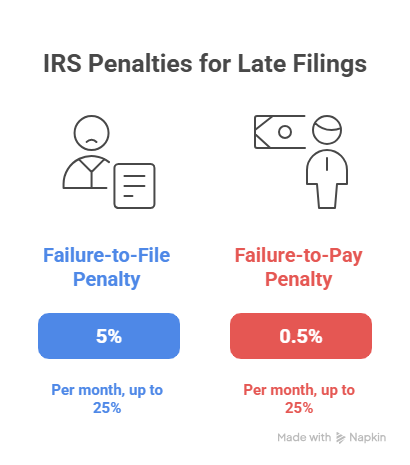
The IRS imposes two separate penalties on late filings that have a balance due:
- Failure-to-File Penalty: 5% of unpaid taxes per month, up to 25% of the total balance.
- Failure-to-Pay Penalty:5% of non-paid taxes per month, up to 25%.
These penalties run simultaneously, so a single unfiled return can reach 47.5% before interest. Interest compounds daily on both unpaid tax and penalties.
Another risk is the IRS filing a Substitute for Return (SFR) using third-party income data without deductions, credits, or exemptions. The resulting liability is usually higher, and it stands as your official record unless you file a superseding return.
How to File Back Taxes When You Have Your Records
If you still have access to your W-2s, 1099s, and financial records from prior years, the path forward is quite simple. Here is what the process looks like:
1. Identify Which Years Are Unfiled
The IRS generally requires the six most recent years of unfiled returns for compliance purposes, though older returns may also be relevant depending on your situation.
2. Gather the Correct Forms for Each Tax Year
Tax law changes year to year, which means you must file each return on the original form version for that specific tax year, not the current year’s form.
3. Request Prior-Year Transcripts
Your IRS wage and income transcripts (available through IRS.gov or by calling the IRS directly) show all third-party reported income for each year. This is your baseline.
4. Prepare and Submit Each Return Separately
Back-year returns cannot be e-filed in most cases and must be mailed to the appropriate IRS service center for that tax year.
5. Include Any Payment You Can
Sending a partial payment with a return reduces the balance interest that builds up on it, even if you cannot pay in full.
Reaching out to our licensed Houston CPA, Zahra Samji, for back taxes guidance at the start of this process helps you avoid errors that can delay processing or create additional correspondence from the IRS.
How to File Back Taxes Without Records and What Your Options Are
Many people assume that without their original documents, there is nothing they can do. That assumption is wrong, and it is worth addressing directly.
If your records are missing or were never kept, you can still reconstruct enough of a return to file:
- IRS wage and income transcripts show all W-2s, 1099s, and other third-party reported income for up to ten years.
- Bank statements can help estimate business income, freelance payments, and deductible expenses.
- Prior tax returns can establish patterns in deductions and credits that remain consistent year to year.
- Receipts, invoices, and contracts stored digitally, even partially, can support business expense claims.
Penalty Relief Options the IRS Offers That Most Taxpayers Don’t Know to Request
Filing your overdue returns and learning how to file back taxes is only part of the resolution. Once your returns are processed, you may qualify for relief that reduces what you owe in penalties.
The IRS offers several formal options:
| Relief Option | Who Qualifies | What It Covers |
| First-Time Penalty Abatement | Taxpayers with a clean compliance history for the prior 3 years | Failure-to-file, failure-to-pay, and failure-to-deposit penalties |
| Reasonable Cause Relief | Taxpayers who can demonstrate circumstances beyond their control | Most civil penalties are reviewed on a case-by-case basis |
| Penalty Relief Due to Incorrect IRS Advice | Taxpayers who relied on written IRS guidance that was wrong | Penalties resulting directly from that reliance |
Setting Up a Payment Plan When You Cannot Pay the Full Balance at Once
Once your returns are filed, you may still owe more than you can pay at once. That is separate from the filing issue, and the IRS offers structured solutions.
The most common option is an Installment Agreement, allowing monthly payments. If your balance is $50,000 or less, you can often apply online without detailed financials.
If your balance is higher or your finances are tight, you may qualify for an Offer in Compromise to settle for less. The IRS reviews your ability to pay, and approval is not guaranteed.
Final Thoughts
Unfiled returns can feel overwhelming, but the IRS has a structured resolution process that improves the sooner you act. Filing stops penalties, opens relief options, and lets you make informed decisions.
At Skyline Financial, Zahra helps clients navigate back taxes with clear, compliance-focused guidance. She explains your options, interprets IRS notices, and helps you move forward confidently.
To stop penalties and resolve your returns, schedule a consultation today with Zahra for the clarity you need.
FAQs
How far back does the IRS require you to go when filing overdue returns?
The IRS typically requires the six most recent years of unfiled returns to be compliant. However, in cases of suspected fraud or major underreporting, they can go further back, and voluntary disclosures for older years may still be advisable.
Can you learn how to file back taxes without records if your documents are lost or destroyed?
Yes. You can request IRS wage and income transcripts for up to ten years and use them with bank records or receipts to reconstruct a good-faith return. Filing something accurate is far better than filing nothing.
What happens if the IRS has already filed a Substitute for Return on your behalf?
You can file your own return to replace the IRS’s Substitute for Return. Your return takes precedence and usually lowers your tax liability, but acting quickly is important as the SFR continues to accrue interest.
Does filing back taxes automatically trigger an audit?
No, filing overdue returns does not automatically trigger an audit. In fact, voluntary filing reduces audit risk, though returns may still be reviewed if there are major discrepancies with IRS records.

