

Strong bookkeeping for startups is not just about tracking income and expenses. It is about building a financial foundation that supports funding, compliance, scalability, and long-term profitability. If your records are inconsistent in the early stages, those gaps will follow you into investor meetings, tax filings, and growth decisions.
At Skyline Financial CPA in Houston, Zahra Samji works with founders who want clarity from day one. We believe that clean books are not a luxury. They are infrastructure.
Why Early Financial Structure Determines Future Stability
Many startups focus on product development, marketing, and customer acquisition. Financial organizations usually become an afterthought.
However, early mistakes can create:
- Misreported revenue.
- Inaccurate expense categorization.
- Missed deductions.
- Cash flow confusion.
- Compliance penalties.
When your books are clean from the start, scaling becomes smoother. Investors, lenders, and tax authorities expect structured reporting. Fixing disorganized records later is always more expensive than setting them up correctly at launch.
Choosing the Right Accounting Method for Your Startup
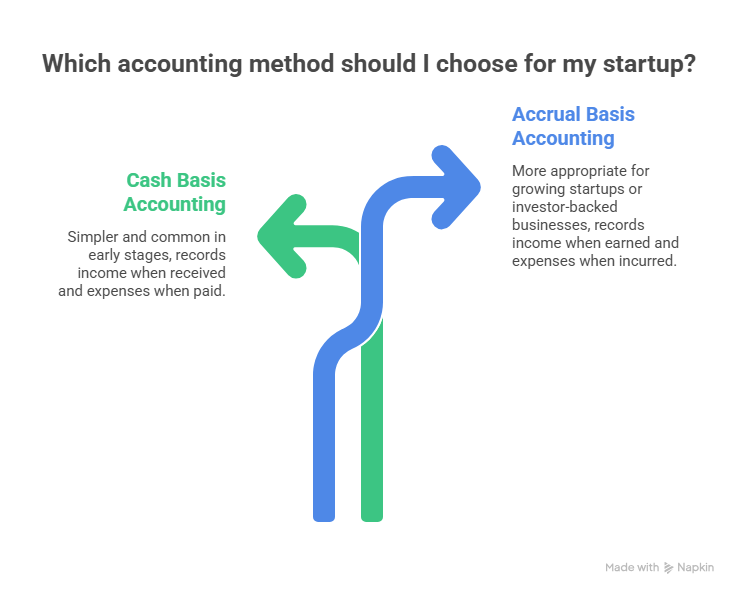
One overlooked decision in bookkeeping for startups is selecting the proper accounting method.
Cash Basis Accounting
- Records income when received.
- Records expenses when paid.
- Simpler and more common in early stages.
Accrual Basis Accounting
- Records income when earned.
- Records expenses when incurred.
- Often required for growing startups or investor-backed businesses.
If you anticipate venture funding or inventory management, accrual accounting may be more appropriate. Making this decision early prevents costly transitions later.
Building a Chart of Accounts That Supports Growth
Your chart of accounts is the backbone of your reporting system. A generic template may not reflect your business model accurately.
For example:
- SaaS startups may require deferred revenue tracking.
- E-commerce companies need inventory categories.
- Service-based businesses benefit from revenue segmentation.
Thoughtful structuring allows you to track performance metrics without reclassifying transactions months later.
When implementing structured Houston bookkeeping services, we focus on customization rather than standard templates.
Clean Separation Between Personal and Business Finances
Early-stage founders blur financial boundaries. This creates tax complications and weakens liability protection.
You should:
- Open a dedicated business bank account.
- Use a separate business credit card.
- Avoid paying personal expenses from business funds.
- Document owner contributions clearly.
Clear separation strengthens compliance and simplifies year-end reporting.
Tracking Founder Contributions and Equity Properly
Startups frequently involve capital injections from founders. These must be recorded accurately as:
- Owner contributions.
- Loans payable.
- Equity investments.
Misclassifying these entries can distort your financial statements and create confusion during funding rounds.
Proper classification ensures transparency when investors review your books.
Revenue Recognition Rules for Startups
Revenue tracking is more nuanced than many founders realize.
You must consider:
- Subscription billing cycles.
- Prepaid service agreements.
- Milestone-based contracts.
- Refund and chargeback reserves.
Improper revenue recognition inflates performance metrics and can damage credibility.
Advanced bookkeeping for startups includes aligning revenue reporting with contractual obligations and accounting standards.
Payroll Compliance From the Beginning
If you hire employees or contractors, payroll compliance becomes critical immediately.
Key areas include:
- Worker classification.
- Payroll tax withholding.
- Quarterly filings.
- Issuing W-2s and 1099s.
Incorrect classification between contractors and employees can trigger penalties. Early compliance prevents regulatory complications later.
Cash Flow Monitoring Other than Profit
Profitability does not guarantee liquidity. Many startups collapse due to cash flow mismanagement, not lack of revenue.
Track:
- Accounts receivable aging.
- Recurring expense cycles.
- Burn rate.
- Runway projections.
A structured startup bookkeeping service should provide visibility into these metrics, not just monthly income statements.
Financial Reporting That Attracts Investors
Investors evaluate more than your product. They review financial hygiene.
They expect:
- Accurate profit and loss statements.
- Organized balance sheets.
- Clear expense breakdowns.
- Realistic projections.
Disorganized books create doubt, even if your concept is strong.
Our professional bookkeeping services ensure that when an opportunity arises, your financial data is ready for review without last-minute cleanups.
Internal Controls Reduce Early Fraud Risk
Startups are not immune to internal risk.
Even small teams should implement:
- Approval processes for expenditures.
- Restricted financial system access.
- Monthly reconciliation reviews.
- Documented expense policies.
These controls protect your company while building financial discipline.
Accounting and Bookkeeping Services for Startups Support Tax Planning
Tax planning should not wait until filing season.
Structured accounting and bookkeeping services for startups allow you to:
- Estimate quarterly taxes accurately.
- Track deductible expenses.
- Evaluate entity elections.
- Prepare for R&D tax credits if applicable.
Without organized records, strategic tax decisions become reactive instead of proactive.
Comparing DIY and Professional Startup Bookkeeping Services
| Feature | DIY Bookkeeping | Professional Support |
| Time Commitment | High | Minimal |
| Error Risk | Higher | Lower |
| Compliance Monitoring | Limited | Ongoing |
| Investor Readiness | Inconsistent | Structured |
| Scalability | Challenging | Flexible |
While DIY software tools are accessible, they cannot replace structured oversight and strategic interpretation.
Preparing for Funding Rounds Without Financial Stress
If you plan on raising capital, your due diligence process will require:
- Historical financial statements.
- Bank reconciliations.
- Tax returns.
- Payroll records.
- Cap table clarity.
Rebuilding records under investor deadlines is stressful and costly.
Strong bookkeeping for startups ensures that growth opportunities are not delayed by administrative gaps.
When to Transition From Basic Support to Scalable Systems
As your startup grows, complexity increases.
You may need:
- Departmental expense tracking.
- Multi-state tax compliance.
- Inventory accounting.
- Budget forecasting.
Scalable startup bookkeeping services adapt as transaction volume and regulatory requirements expand.
Waiting too long to upgrade systems can result in data migration challenges and reporting inconsistencies.
The Bottom Line
Clean financial records create confidence. They support funding, simplify tax filing, improve cash flow oversight, and reduce compliance risk.
If you want clarity, structure, and investor-ready reporting, now is the time to implement professional bookkeeping for startups. Reach out to Houston CPA Zahra for a personalized consultation for bookkeeping and accounting services Houston today!
FAQs
- What makes a startup bookkeeping service different from small business bookkeeping?
Startups face rapid growth, investor reporting requirements, and complex revenue recognition issues that require more strategic oversight.
- Do I need bookkeeping services for startups if I use accounting software?
Software records transactions, but it does not ensure proper classification, compliance monitoring, or strategic planning.
- When should I hire a startup bookkeeping service?
Ideally, from the beginning. Early structure prevents costly corrections later and supports investor readiness.
- Are accounting and bookkeeping services for startups tax-deductible?
Yes. Professional financial services are generally deductible as ordinary and necessary business expenses.
- Can startup bookkeeping services help with funding preparation?
Yes. Organized records, accurate financial statements, and clear reporting significantly strengthen your position during investor due diligence.

