

Launching a startup requires vision, persistence, and smart financial decisions. While founders focus on product development and growth strategies, the financial structure behind your company plays an equally critical role.
From managing cash flow to preparing for investor scrutiny, accounting for startups becomes the foundation that supports sustainable growth.
Below, we explore how founders can use accounting strategically to build strong financial systems, improve investor readiness, and maintain tax compliance from day one.
Building a Financial System That Reflects Your Business Model
Your accounting structure should mirror the way your startup actually operates. Instead of simply recording transactions, your financial records should highlight the key metrics that drive your business model.
For example:
| Metric | Why It Matters for Your Startup | Strategic Action |
| Gross Margin | Shows how scalable your product or service is | Monitor efficiencies as production grows |
| Burn Rate | Determines how long your capital will last | Review monthly to manage runway |
| LTV to CAC | Measures the profitability of acquiring customers | Aim for a ratio near 3:1 |
| R&D Spend | Eligible for tax credits | Track innovation-related expenses carefully |
Aligning your chart of accounts with these metrics helps transform your ledger into a strategic dashboard rather than a simple record of transactions.
Many founders discover that structured startup accounting gives them clearer visibility into operational performance and long-term financial sustainability.
Establishing a Framework for Accounting for Startups
Early-stage companies default to cash-basis accounting because it feels easier. However, as your startup grows and begins attracting investors, accrual-basis accounting becomes essential.
Accrual accounting keeps track of revenue when it is earned and expenditures when they are incurred. This approach gives you a more detailed picture of profitability and financial health. Investors also prefer accrual-based reporting because it provides a more accurate representation of long-term performance.
When you integrate professional accounting services Houston early in your journey, you create a system that scales with your business. Each transaction is categorized correctly, tax implications are considered from the start, and your financial records remain organized for audits, investor reviews, and tax filings.
This level of structure ensures your startup moves beyond basic compliance and toward strategic financial management.
Managing Burn Rate and Understanding Your Runway
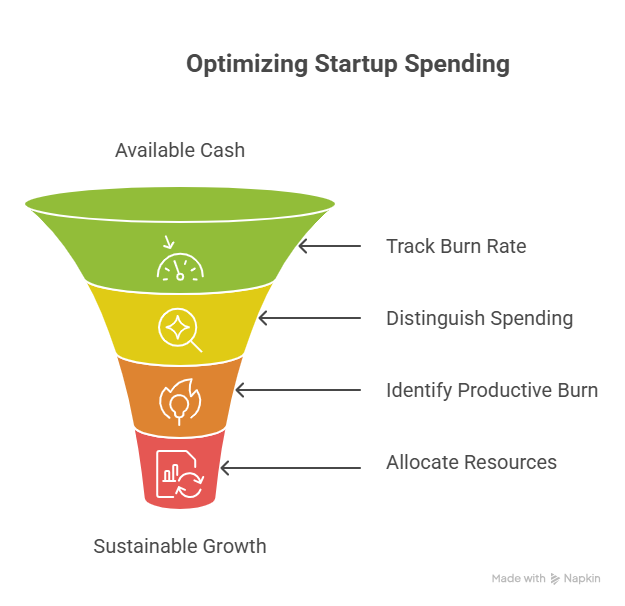
One of the most critical metrics for founders is burn rate. It represents how quickly your startup is spending its available cash.
However, effective founders go further than tracking a single number. You must distinguish between productive spending and financial leakage.
Productive burn might include:
- Hiring key engineers or developers.
- Investing in marketing campaigns that generate measurable growth.
- Expanding infrastructure to support increasing demand.
Unproductive burn, on the other hand, usually results from poor oversight or unmonitored operational expenses.
With accounting for startups, you can perform monthly runway analyses. This process estimates how many months of funding remain before your startup must become profitable or raise additional capital.
When you have accurate financial data, you gain the ability to make proactive decisions rather than reacting to financial stress at the last moment.
Connecting Your Cap Table to Financial Reporting
Equity management is another area where founders frequently encounter financial complexity. Every funding round, stock option grant, or convertible note has accounting implications that must be reflected correctly in your financial statements.
For example, issuing stock-based compensation affects your income statement and can influence your tax obligations. Convertible notes or SAFEs must also be categorized properly within your financial records.
Strategic accounting advice for startups ensures that your cap table and financial statements align with each other. When investors review your records during due diligence, this consistency demonstrates professionalism and financial discipline.
Accurate reporting with the help of our licensed Houston CPA, Zahra Samji, not only protects compliance but also strengthens investor confidence in your company’s leadership.
Leveraging Tax Credits That Support Innovation
Many startups are eligible for tax credits without realizing it. One of the most valuable opportunities is the Research and Development (R&D) tax credit.
If your startup is developing new software, designing products, or improving technological processes, your activities may qualify. These credits can offset payroll taxes, providing financial relief even before your business becomes profitable.
The challenge lies in maintaining the documentation required to claim the credit successfully. You must track:
- Employee hours spent on innovation.
- Development costs.
- Technical experimentation and testing.
Accurate recordkeeping through professional Houston bookkeeping services makes this process significantly easier. When innovation-related expenses are tracked properly, claiming the credit becomes a streamlined annual process rather than a complicated reconstruction of past records.
Conclusion
Your startup’s financial structure is more than a compliance requirement. It is a strategic tool that supports smarter decisions, stronger investor relationships, and long-term stability.
By improving your burn rate, aligning your accounting system with your business model, and maintaining organized financial records, you position your company for sustainable growth. Proper accounting for startups allows you to turn financial data into a roadmap for expansion rather than a source of confusion.
Skyline Financial CPA Houston helps founders build structured financial frameworks, maintain compliance, and gain the clarity needed to scale confidently. Reach out to Zahra today to schedule a consultation and take charge of your startup’s financial future.
Accounting for Startups FAQs
What is the most common mistake in startup accounting?
The most common error is failing to separate personal and business finances or delaying the setup of a professional ledger. Getting professional accounting advice for startups early on prevents the “cleanup costs.”
When should I hire an external professional for my startup?
You should consider accountant services for startups the moment you receive outside investment or when your monthly transactions exceed your ability to track them accurately in a basic spreadsheet.
How does accrual accounting benefit my fundraising efforts?
Investors prefer accrual-based startup accounting because it provides a more precise overview of your company’s long-term health. It shows when revenue is earned and when obligations are incurred, rather than just when cash enters or leaves the bank, making your growth trends much clearer.
Can a startup claim tax credits if they aren't yet profitable?
Yes. Through certain provisions, startups can apply R&D tax credits against their payroll tax liability. This is a vital part of accounting for startups, as it provides immediate cash flow benefits even before your company reaches a point of income tax liability.
How often should I review my financial statements?
You should review your balance sheet, P&L, and cash flow statement at least once every month. This pace allows you to identify trends in your burn rate and adjust your strategy before small issues become existential threats to your business.

