

Tax season has a way of exposing every gap in your recordkeeping, such as missed receipts, uncategorized expenses, and misplaced 1099s. Having a reliable small business tax preparation checklist keeps those gaps from turning into penalties, missed deductions, or a chaotic rush the week your return is due.
This checklist walks you through every category that matters, so you walk into tax season organized and in control.
The Business Documents You Need to Gather Before Anything Else
Before you look at a single deduction, your foundational business documents need to be in order. These establish the legal and structural context for everything else on your return.
Make sure you have:
- Your EIN (Employer Identification Number) and business formation documents.
- Current year’s articles of incorporation or organization (especially if anything changed).
- Any ownership or partnership agreements that affect how income is allocated.
- Records of estimated tax payments you made during the year, all four quarters.
- Prior-year tax return for reference on carry-forward losses, depreciation schedules, and basis calculations.
If your entity structure changed, for example, if you elected S corp status, that election paperwork needs to be included. Missing it from your tax preparation checklist for small business creates confusion about how your income should be reported and taxed.
Income Documentation That Goes Beyond the Obvious 1099
Most small business owners know to collect their 1099-NEC forms. What gets missed is everything else that counts as taxable income.
Your income documentation should include:
- All 1099-NEC and 1099-K forms from clients and payment processors.
- Bank statements for all business accounts. These catch income that never generated a 1099.
- Sales records or invoices for revenue not reported on a 1099.
- Gross receipts logs if you operate a cash-heavy business like retail, food service, or contracting.
- Loan forgiveness documentation, if you received PPP or similar relief, may carry tax implications.
A common mistake is assuming that if no 1099 was issued, the income doesn’t need to be reported. It does. Your bank statements are often the most reliable reconciliation tool you have.
Expense Categories Small Business Owners Most Frequently Underreport
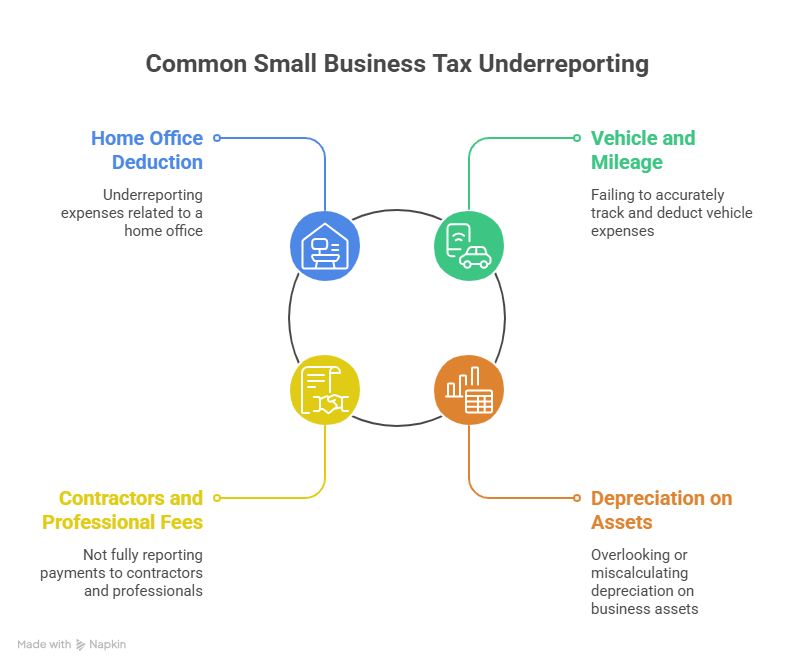
This is where a solid small business tax preparation checklist pays for itself. Underreporting deductions is just as costly as making a filing error since you leave money on the table that you’re fully entitled to keep.
Home Office Deduction
If you use a dedicated portion of your home exclusively for business, you may qualify. Document the square footage of your workspace versus your total home, plus utilities, insurance, and rent or mortgage interest allocated to that space.
Vehicle and Mileage
Track every business mile with a mileage log that includes date, destination, and purpose. If you use the actual expense method instead, keep fuel, insurance, registration, and maintenance receipts tied to your vehicle.
Contractors and Professional Fees
Any contractor you paid $600 or more during the year requires a 1099-NEC. Confirm you collected W-9s for all vendors and have documentation of payments. Legal, accounting, and consulting fees are also fully deductible.
Depreciation on Assets
If you purchased equipment, machinery, or technology during the year, those assets may qualify for Section 179 expensing or bonus depreciation rather than being spread across multiple years. Don’t miss the opportunity to accelerate that deduction.
Payroll, Sales Tax, and Texas-Specific Obligations That Affect Your Return
If you have employees, your payroll records feed directly into your federal return. Pull together your Form 941 filings for all four quarters, your W-2 and W-3 transmittal, and any state unemployment tax (FUTA/SUTA) documentation.
For Texas businesses, two state-level obligations deserve separate attention:
- Sales and use tax: If you collected sales tax during the year, confirm your remittances to the Texas Comptroller match your sales records. Discrepancies create audit exposure.
- Texas franchise tax: This applies to most LLCs and corporations doing business in Texas, regardless of whether the entity was profitable. It’s calculated differently from federal income tax and has its own filing deadline.
How to Use This Small Business Tax Preparation Checklist Most Effectively
A small business checklist for taxes is only useful if it reflects your actual business structure. Sole proprietors, S Corps, and multi-member LLCs each have different forms, deadlines, and documentation requirements. Before you begin gathering, confirm which forms apply to your entity, whether that’s a Schedule C, Form 1120-S, or Form 1065.
Once you know your filing requirements, work through each category above systematically. Reconcile your bank statements against your accounting records first, then layer in receipts and supporting documentation. Addressing discrepancies before your tax preparation Houston TX appointment saves significant time and reduces the risk of amended returns later.
If your books aren’t current, now is also the time to get your self-employment tax preparation records organized, especially if your income came from multiple clients or sources throughout the year.
Conclusion
Using a thorough small business tax preparation checklist is one of the most practical steps you can take to protect your deductions, stay compliant, and walk into tax season without last-minute panic.
At Skyline Financial CPA Houston, Zahra Samji works directly with Houston small business owners to bring clarity to exactly these situations. If you want personalized guidance on what applies to your specific entity and tax position, book a consultation today.
Zahra makes sure your return reflects everything you’ve earned and nothing you owe unnecessarily.
Small Business Tax Preparation Checklist FAQs
What is the most commonly missed item on a small business tax preparation checklist?
Estimated tax payments made throughout the year are frequently forgotten. Missing them causes discrepancies between what was paid and what’s owed, which can trigger penalties.
Do I need to report income if I didn't receive a 1099?
Yes. All business income is reportable regardless of whether a 1099 was issued. Bank statements and invoicing records are your documentation backup.
When is the Texas franchise tax due for small businesses?
Texas franchise tax reports are generally due May 15th. Most small businesses qualify for the No Tax Due threshold, but the report still needs to be filed.
How far in advance should I start working through this small business tax checklist?
Ideally, you should work on a tax preparation checklist for a small business six to eight weeks before your filing deadline. That window gives you time to reconcile records and address any questions with your CPA.

