
If you own rental property, you have probably asked yourself whether it’s really possible to keep more of what you earn. The idea of how to pay no taxes on rental income sounds almost too good to be true, but it is not about loopholes or risky behavior. It’s about understanding how the tax code treats real estate and using those rules correctly.
Skyline Financial CPA Houston works with landlords every day who are surprised to learn how much control they actually have over their tax outcome. When you understand the strategy behind the numbers, rental income can become one of the most tax-efficient ways to build long-term wealth.
Why Rental Income is Taxed Differently Than Earned Income
Rental income is included in a special category under the IRS rules. Unlike wages, it allows you to deduct expenses that don’t require you to spend cash during the year. That distinction is what makes advanced planning so effective.
Before you focus on strategies, it’s important for you to understand the foundation that supports them.
How to Pay No Taxes On Rental Income Using Depreciation
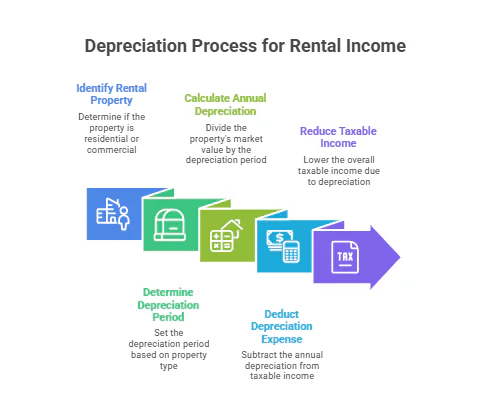
Depreciation is the single most powerful tool available to rental property owners. It’s often called a “phantom expense” because it reduces your taxable income without reducing your bank balance.
The IRS allows you to depreciate the market value of the building over time:
- 5 years for residential property.
- 39 years for commercial property.
Even if your property is gaining in real life, the IRS assumes that the structure is getting older. That assumption works in your favor.
A Simple Depreciation Example
| Item | Amount |
| Building value | $275,000 |
| Annual depreciation | $10,000 |
| Net rental cash flow | $8,000 |
| Taxable rental income | $0 |
In this situation, depreciation removes your taxable income entirely and even creates a passive loss you can carry forward.
The Impact of Ordinary and Necessary Expenses on Your Tax Planning
While depreciation is the headline strategy, your everyday expenses provide the structure underneath it.
You can deduct costs such as:
- Property management fees.
- Insurance and property taxes.
- Mortgage interest.
- Repairs and maintenance.
Many landlords ignore smaller deductions. Mileage to visit the property, a home office where you manage rentals, and professional fees are all legitimate deductions. Even advisory costs related to real estate accounting Houston TX can be written off as part of operating the property.
How Knowing the Difference Between Repairs and Improvements Can Save You Money
One of the most common mistakes we see among investors who are looking into how to pay no taxes on rental income is that they confuse repairs with capital improvements.
Repairs
Repairs keep your property in working condition and are usually deductible in the year you pay for them. Replacing a broken door or fixing a leak are good examples.
Improvements
Improvements add value or extend the life of your property. New roofs or full kitchen renovations must usually be depreciated over time.
There is also a planning opportunity here. Using the De Minimis Safe Harbor election, many smaller upgrades can be deducted immediately instead of being spread out over decades.
The Qualified Business Income Deduction Can Reduce Taxes Further
As a landlord, you can qualify for the Section 199A deduction, commonly known as the Qualified Business Income deduction. This allows up to 20% of net rental income to be deducted before tax is calculated.
To meet the criteria, you generally need to:
- Maintain separate books and records.
- Conduct at least 250 hours of rental services annually.
This deduction alone can dramatically reduce taxable income without increasing your expenses.
Real Estate Professional Status Changes the Rules Entirely
Under normal circumstances, rental losses are passive and can’t offset W-2 income. That limitation disappears if you qualify as a real estate CPA Houston, which is a key factor when exploring how to pay no taxes on rental income.
To fulfill the requirements, you must:
- Invest more than 750 hours per year in real estate activities.
- Spend more time in real estate than in any other profession.
When you qualify, depreciation losses can offset salary or business income, which is how some investors legally reach zero tax liability.
Why Short-Term Rentals Offer Unique Tax Advantages
If a real estate professional status is not realistic for you, short-term rentals may still provide an opportunity.
When the average stay is seven days or less, and you actually participate, the activity may no longer be treated as passive. Losses can then offset non-rental income.
This strategy has become especially valuable for high-income professionals who are looking for flexibility without meeting the 750-hour threshold.
Keep Clean Records to Protect Your Tax Position
When your return shows significant income and little to no tax, documentation matters. The IRS expects your numbers to be supported.
You should maintain:
- Separate bank accounts for rentals.
- Digital copies of receipts.
- Mileage and time logs when applicable.
At Skyline Financial Management, Zahra Samji helps you support the strategies with solid records. This includes understanding how ownership structures and franchise tax preparation considerations relate to the larger context.
How to Pay No Taxes on Rental Income FAQs
1. Is rental income always taxable?
Rental income is taxable, but deductions and depreciation can reduce taxable income to zero in many cases.
2. Can depreciation be taken if my property is increasing in value?
Yes. Market value and IRS depreciation rules are completely separate.
3. What happens when I sell the property?
Depreciation is recaptured unless you use a 1031 exchange to defer taxes.
4. Do I need a CPA for rental tax planning?
Rental tax rules are complex, and professional guidance can help you avoid costly mistakes.
5. Is every strategy right for every landlord?
No. Your income level, time involvement, and long-term goals decide what works best.
In Closing
Learning how to pay no taxes on rental income comes down to planning, documentation, and using the tax code as it was written. When you layer strategies correctly, your rental property can generate cash flow and minimize tax exposure year after year.
We as real estate CPA Houston at Skyline Financial Management help you apply these rules with confidence and clarity. Ready to turn your rental income into a more tax-efficient asset? Book your consultation with our certified Houston CPA, Zahra, today!

