
Tax season can be confusing, especially when your financial life seems exactly the same as last year. You earn the same income, claim the same dependents, and follow the same routine, yet you still end up asking, “Why do I owe taxes this year when nothing changed?”
This situation is more common than many taxpayers realize. Even if your personal circumstances stay the same, tax regulations, withholding calculations, and financial reporting rules can shift behind the scenes. These subtle changes affect your final tax liability without you noticing during the year.
At Skyline Financial CPA Houston TX, we regularly help individuals understand these unexpected tax outcomes. Zahra Samji works closely with clients to review their filings and identify the hidden factors that can turn a typical refund into a balance due.
Hidden Factors Explaining Why Do I Owe Taxes This Year When Nothing Changed
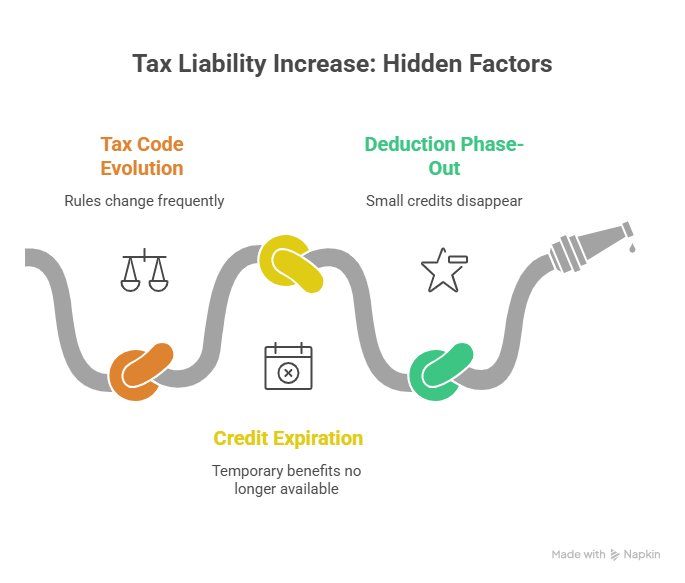
Sometimes the change is not in your income or lifestyle but in the rules surrounding taxation. The tax code evolves frequently, and temporary credits or deductions expire.
For example, certain energy credits, education deductions, or pandemic-related tax adjustments may no longer be available. If you relied on these benefits in previous years, their expiration can increase your tax liability even when your financial situation appears identical.
This is a common reason taxpayers ask, “Why do I owe taxes this year when nothing changed?” When we review returns for clients handling their individual taxes, we discover that the difference stems from a credit that quietly phased out.
Even a relatively small credit disappearing can change your final result from a refund to a tax bill.
Adjustments to IRS Withholding Tables That Affect Your Paycheck
Another major factor is federal withholding. Employers calculate paycheck tax deductions based on IRS withholding tables, which the IRS periodically updates.
These updates are designed to make withholding more accurate, but they sometimes reduce the amount withheld during the year. While this may increase your take-home pay slightly, it can also leave you under-withheld when tax season arrives.
If less tax is being taken out of each paycheck, your end-of-year balance will naturally be higher. A simple W-4 review can correct this issue before the next filing season.
When Small Raises Quietly Increase Your Tax Liability
Many taxpayers receive modest cost-of-living adjustments or small salary increases during the year. While these changes may not feel significant, they can still influence your tax position.
Even a minor income increase can push part of your earnings into a higher tax bracket. This shift is referred to as “bracket creep.” Although the IRS adjusts tax brackets for inflation, those adjustments do not always align perfectly with every taxpayer’s situation.
As a result, a raise that feels insignificant might still lead you to ask, “Why do I owe so much in taxes?” when reviewing your return.
The key takeaway is that even stable income levels can interact differently with tax brackets each year.
Investment Income That Creates Unexpected Tax Bills
Another overlooked factor is investment-related income. You may not have sold any stocks or crypto assets during the year, but certain investments can still generate taxable events.
Mutual funds, for example, commonly distribute capital gains when fund managers rebalance their portfolios. These distributions are reported on Form 1099-DIV and must be included in your tax return.
This type of income is sometimes called “phantom income” because you may not have physically withdrawn money from your investment account.
For many taxpayers, this explains “why do I owe federal taxes this year?” even though their salary and daily spending habits remained unchanged.
The Impact of Changing Deduction Value Over Time
Even when deductions remain available, their real value can change over time.
Inflation, updated income thresholds, or shifting eligibility rules can reduce how much benefit a deduction provides. For example, if the standard deduction increases but your itemized deductions remain the same, you may receive less overall tax relief.
Similarly, certain deductions gradually phase out as income rises. If you crossed one of those thresholds, you might lose access to a tax break you previously relied on.
These small adjustments can collectively explain “why do I owe taxes this year when nothing changed,” even though your financial routine stayed consistent.
Why Self-Employed Income Leads to Unexpected Balances
If you earn income from freelance work or a side business, your tax situation becomes even more dynamic.
Unlike traditional employees, self-employed individuals are accountable for both the employer and employee amounts of Social Security and Medicare taxes. These are known as self-employment taxes and must usually be paid through quarterly estimated payments.
When income from a side hustle grows slightly, the tax impact can increase significantly. If estimated payments were too low, you may face both a balance due and potential penalties.
Tax planning for self-employment taxes requires regular adjustments to avoid surprises. Zahra Samji works with independent professionals to ensure their estimated payments accurately reflect their current income.
Final Thoughts
If you are still wondering why do I owe taxes this year when nothing changed, the answer lies in small shifts within the tax system rather than major life changes.
Tax regulations, withholding formulas, and credit eligibility can all evolve from year to year. Without regular review, these changes can easily lead to unexpected balances.
Working with a licensed Houston CPA provides the clarity you need to stay ahead of these adjustments. Zahra offers personalized tax guidance to help you understand your liability, adjust your withholding, and plan for future tax years.
Instead of waiting for another surprise bill, take a proactive approach to your taxes. Schedule a consultation with her today and gain a clearer view of your financial future.
FAQs
Why do I owe federal taxes this year if my salary stayed the same?
You may owe because your employer withheld less tax, or certain credits expired. IRS withholding updates can reduce paycheck deductions and lead to a balance due.
Why do I owe so much in taxes compared to last year?
A higher tax bill comes from capital gains distributions, filing status changes, or losing credits like the Child Tax Credit. These factors can increase liability even when income stays the same.
Why do I have to pay taxes this year when I usually get a refund?
Refunds happen when you overpay taxes during the year. If withholding became more accurate or credits changed, your refund may disappear and turn into a payment.
Why do I always owe taxes even though I claim zero?
You may have additional income from dividends, interest, or side work that isn’t fully taxed. Adjusting your W-4 withholding can help prevent owing every year.

